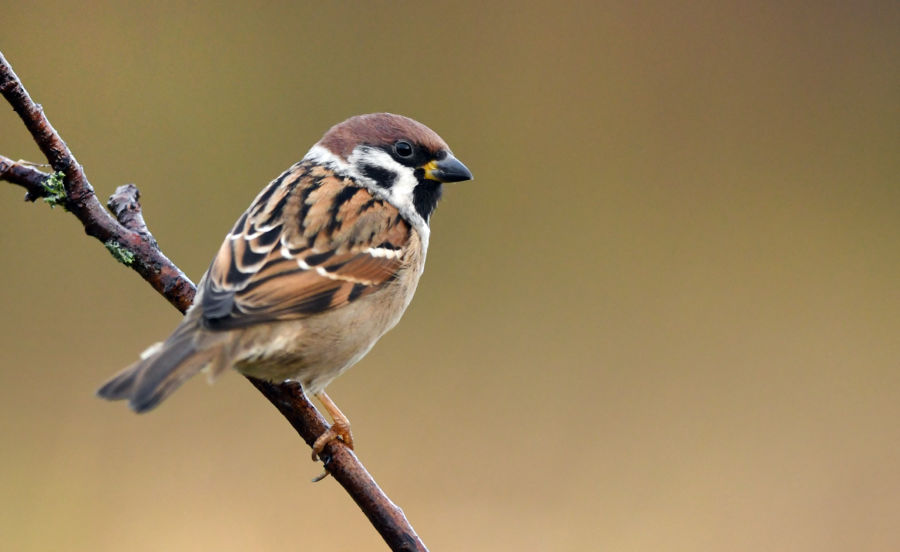
Seen all year round, the Tree Sparrow is scarcer in the uplands and far northern/western areas of the UK. The main populations are found in the Midlands and southern/eastern England.
Identification
Adult: Smaller than the House Sparrow, both sexes of the Tree Sparrow show great similarities. Identified by a chocolate-brown crown, a small black bib, a black spot on white cheeks, a white half collar, white underparts and a tail almost permanently cocked.
Size: 13.5–14.5cm.
Bill: Black, short and stubby.
Legs: Red, medium length.
Habitat: Gardens, heaths, woodlands, fields and hedges.
Behaviour: Flits, perches openly, hops, takes off/lands from vegetation or ground.
Flocking: 1–15.
Flight: Direct.
Voice: Distinct chup – chup and tek – tek
Breeding
Nest: Tree, rocks or against a wall.
Eggs: 4–6. Pale grey with brown spots.
Incubation period: 11–14 days.
Fledgeling: 12–14 days.
Broods: 2–3. April–June.
Food: Seeds and insects.
UK breeding pairs: 110,000.
Suggested feed
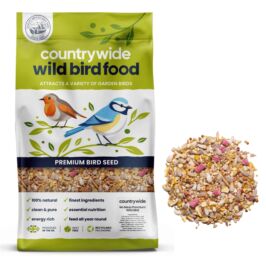
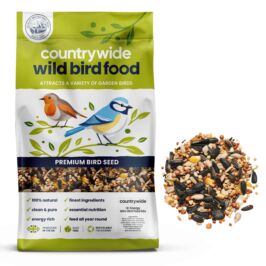
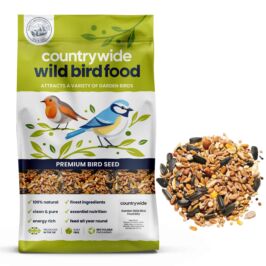
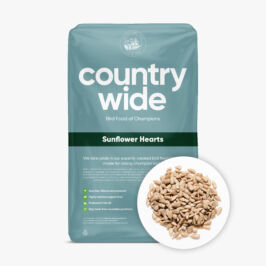
Countrywide Premium No Mess Wild Bird Mix, Countrywide High Energy Wild Bird Mix, Countrywide Garden Wild Bird Mix, Countrywide Sunflower Hearts, Countrywide Niger Seed.